
What Phone Case Vending Machine Supplier Costs Actually Include (And What Gets Left Off the Quote)
Quotes from a phone case vending machine supplier can look deceptively clean — one number, maybe a delivery timeline, done. But that number rarely tells the whole story, and the gap between what you see on the invoice and what you actually spend can genuinely surprise you.

So here’s what’s usually baked into a standard quote: the machine hardware itself, basic software licensing, a default UI skin, and factory testing before shipment. That’s roughly the baseline. Some suppliers — Caiyunjuan being one of the more transparent ones — also bundle in CE and FDA compliance documentation, which matters a lot if you’re placing units in a US mall or a European transit hub. Certification paperwork isn’t glamorous, but missing it can get your machine pulled.
Not included. Almost never.
Shipping, import duties, local installation labor, and ongoing content management — these almost always land outside the original quote. A machine printing custom cases weighs somewhere in the 200–350kg range depending on the model, so freight costs from Guangzhou to, say, Chicago or Sydney aren’t trivial. And if you’re sourcing multiple product types from the same logistics chain — anything from Genuine supplements to a Rapid Test Kit to Disposable Facial Towels — you already know how fast ancillary shipping costs stack up when you’re not watching them.
The software side catches people off guard too. Basic remote monitoring is usually included. Advanced analytics dashboards, multi-location management portals, custom app integrations — those typically sit behind a recurring SaaS fee that doesn’t appear on the initial hardware quote. Ask specifically about year-two costs. Always.
And then there’s the stuff nobody thinks about until they’re already set up: replacement print cartridges, substrate refills, periodic calibration. One operator compared it to buying a camera and forgetting to budget for an nd1000 filter or memory cards — the base unit works, but you’re not fully operational without the accessories. Same logic applies here. The parallel to industries like automotive cnc machining is actually pretty apt: the machine price is just the entry point; consumables and maintenance are the real long-term line items.
- Hardware unit (base cost — usually what’s quoted)
- International certifications (CE, CB, FDA — confirm if included)
- Freight, customs, and last-mile delivery (almost always extra)
- Software licensing tiers and annual SaaS fees
- Consumables: print cartridges, case substrates, calibration kits
- On-site installation and staff training
- Warranty terms beyond year one
How Supplier Tier and Factory Scale Affect Your Per-Unit Price
Supplier tier matters more than most buyers expect — and the pricing gap between tiers isn’t just about margin, it’s about what’s actually built into the machine before it ships. A small workshop quoting $8,000 per unit and a mid-scale certified factory quoting $11,500 are not selling the same thing, even if the spec sheet looks identical at a glance.
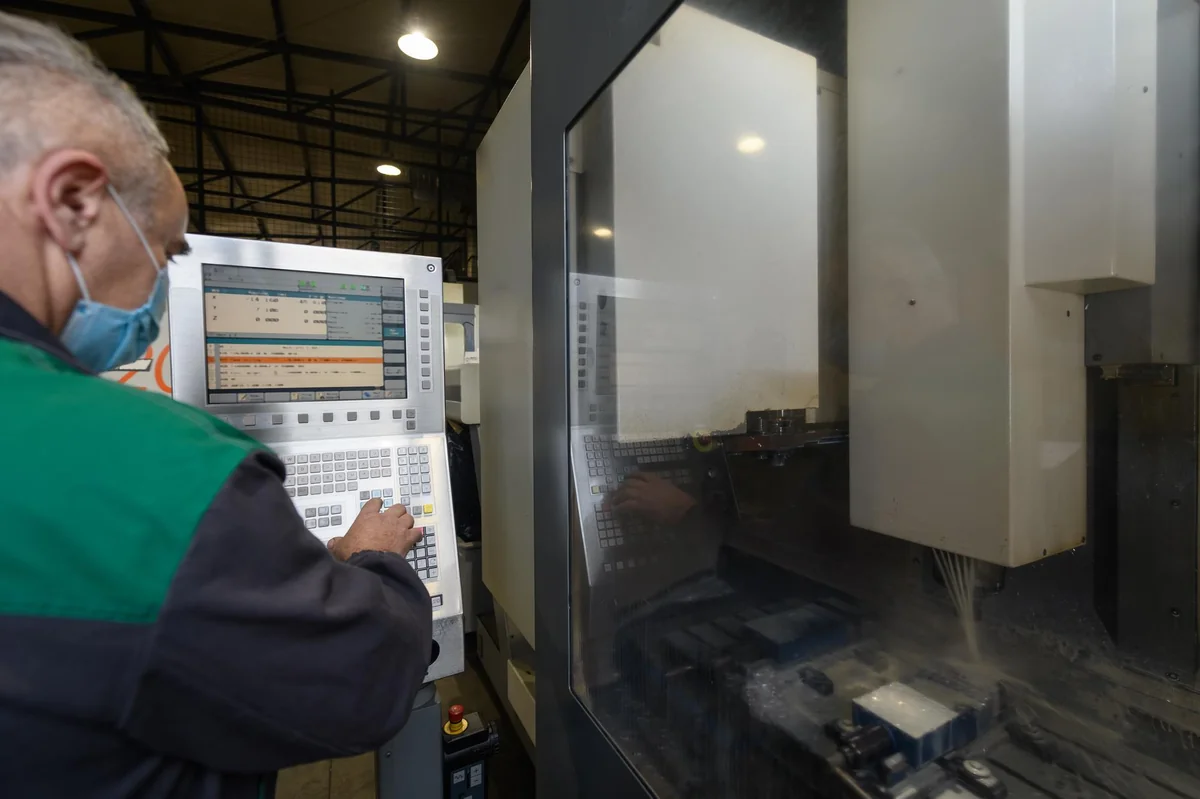
So here’s how the tiers actually break down in practice. Trading companies sit at the top of the distribution chain — they source from multiple factories, mark up 15–30%, and handle the export paperwork. Convenient, yes. But you’re paying for a middleman, and when something breaks, the support chain gets long fast. Below them are small OEM workshops: lower base price, limited certification coverage, and production runs that slow down the moment a larger order comes in ahead of yours. Then there are vertically integrated manufacturers — companies that do their own R&D, hold their own patents, run their own QC floor, and ship direct. That last category is where you find the real value, even if the sticker price looks higher up front.
Factory scale changes the per-unit math in ways that aren’t obvious. A facility producing 20,000+ units annually — like Caiyunjuan, which operates out of a 6,000+ square meter facility in Guangzhou — achieves component pricing and process efficiency that a 500-unit-per-year shop simply cannot match. That efficiency flows downstream into your quote, your lead time, and your warranty terms. Think of it the way you’d think about Rapid Test Kit manufacturing: a facility with real clinical-grade infrastructure produces a fundamentally different product than a budget assembler, even if both call it the same thing.
And certifications are a direct function of scale. CE, CB, KC, FDA compliance — those cost real money to obtain and maintain. Smaller suppliers often skip them or offer them as paid add-ons. (This is the Genuine supplements problem translated into hardware: the label might say the right things, but the underlying process tells a different story.)
| Supplier Tier | Typical Per-Unit Range | Certifications Included | After-Sales Support |
|---|---|---|---|
| Trading Company | $10,500 – $14,000 | Variable, often sourced | Outsourced, slow |
| Small OEM Workshop | $7,500 – $10,000 | Partial or none | Limited, inconsistent |
| Integrated Manufacturer | $10,000 – $13,500 | CE, CB, FDA standard | Dedicated team, 24/7 |
Not a small difference. Not at all.
Why Manufacturers Like Caiyunjuan Price Differently Than Middlemen
Here’s the thing nobody talks about: a middleman doesn’t build anything. They buy, mark up, and resell — and every layer of that chain costs you money that has nothing to do with the machine itself.

An integrated manufacturer like Caiyunjuan operates from a single production facility in Guangzhou — over 6,000 square meters, in-house R&D, their own tooling — which means the price they quote reflects actual cost of goods, not a broker’s commission on top of a wholesaler’s margin on top of the factory price. That’s a fundamentally different math problem. And it’s why two quotes for what looks like the same phone case vending machine supplier can differ by $3,000 or more without either party being dishonest about it.
Middlemen aren’t evil. Sometimes they’re genuinely useful — especially if you need local warehousing or consolidated shipping. But what they can’t give you is transparency into what was skipped during production. Certifications cost money. CE compliance testing costs money. The kind of precision component work you’d associate with automotive cnc machining — tight tolerances, verified materials, repeatable output — doesn’t come from whoever quoted the lowest price on Alibaba last Tuesday.
So when you’re comparing quotes, look at what’s baked in versus what’s an add-on. Caiyunjuan includes CE, CB, and FDA compliance as standard. Some trading companies treat those the way certain brands treat Genuine supplements — the label implies quality, but dig into the actual documentation and things get murky fast. Same story with after-sales. A dedicated 24/7 technical support team is a hard cost that manufacturers absorb; middlemen often outsource it, which is why response times feel like waiting on a Rapid Test Kit result that never comes back.
One more thing worth flagging: software customization. OEM interface work — the kind that lets you rebrand the UI, adjust the product catalog, tweak the UX — is something only the original manufacturer can actually do. A trading company can promise it. Delivering it is a different conversation entirely. (Think of it like ordering a specialty item — Disposable Facial Towels, say — and getting a generic substitute because the middleman just sourced whatever was available.)
Direct. Always cheaper in the long run. Not always cheaper on paper — but always cheaper when you count what you actually get.
Certifications, R&D Investment, and Why They Show Up in the Cost
Certifications cost real money. Not filing fees — actual engineering hours, third-party lab testing, iterative redesigns when something fails inspection. A phone case vending machine supplier that holds CE, CB, KC, and FDA compliance didn’t stumble into those credentials. That’s years of documented process work, and yes, it shows up in the unit price.
Here’s the part buyers tend to skip over: R&D investment isn’t a line item you see on a quote sheet, but you feel it everywhere else. The precision of the print mechanism. The reliability of the touchscreen calibration. The way the machine handles edge cases — a warped case blank, a mid-job power interruption — without jamming or corrupting the output. That kind of robustness comes from engineering depth, the same way automotive cnc machining tolerances are tighter on a performance part than a commodity bracket. Corners cut during development don’t show up until month four of deployment, usually on a Saturday night in a busy mall.
Caiyunjuan, for reference, carries 70+ patents and structural certificates built on over nine years of dedicated R&D. That’s not marketing copy — that’s the paper trail behind why their machines don’t need constant babysitting in the field.
And ISO certification matters more than people realize. It’s not just a logo on a spec sheet. It means the factory’s production processes are audited, repeatable, and documented. You’re buying consistency — the 200th unit off the line should perform identically to the 10th. For anyone scaling across multiple locations, that predictability is worth every cent of the premium.
So when you’re comparing quotes and one supplier is noticeably cheaper, ask specifically which certifications their machines carry. Not which ones they can “arrange.” Which ones are current, documented, and independently verified. (Unverified certification claims in this space are about as reliable as Genuine supplements sold through grey-market channels — the label looks right until it doesn’t.)
Skipping this check is the nd1000 filter equivalent of buying a neutral density filter with no coating quality spec — fine until the light hits wrong and everything falls apart.
Conclusion
The certification question is the one that separates a supplier worth talking to from one worth avoiding — full stop. When you’re evaluating any phone case vending machine supplier, don’t let a polished catalog or a competitive quote distract you from asking for documented, independently verified credentials. CE, CB, ISO — current, not “in progress.”
Honestly, the machines that fail in the field almost always have a paper trail that should’ve raised flags earlier. The specs looked fine. The price looked great. Nobody asked the hard questions.
Do the homework upfront, and the rest of the decision gets a lot easier.
Frequently Asked Questions
Q: What should I look for in a phone case vending machine supplier before signing anything?
A: Certifications first — CE, CB, and ISO documentation that’s current and independently verified, not just listed on a spec sheet. Beyond that, look for a supplier with actual R&D depth (patents on record, not just marketing claims) and a real after-sales support structure. A 24/7 technical support line sounds like a small detail until your machine throws an error at 11pm on a Saturday.
Q: How much does a phone case printing vending machine typically cost?
A: Ballpark range runs from roughly $8,000 to $20,000+ depending on print technology, touchscreen specs, and whether you’re getting OEM branding built in. A basic unit from an unverified supplier might come in cheaper — but that price gap usually shows up later in repair costs and downtime. Factor in total cost of ownership, not just the sticker.
Q: How long does it take for a phone case vending machine to print a case?
A: Most modern machines from a reputable phone case vending machine supplier will complete a custom print in 2 to 4 minutes. That’s the sweet spot for high-traffic locations — fast enough to hold a customer’s attention, slow enough that the print quality doesn’t suffer.
Q: Why does the supplier’s country of origin matter when buying a vending machine?
A: It matters mostly because of certification alignment and parts availability. A machine built for the Chinese domestic market may not carry CE or FDA compliance out of the box — which creates real liability issues if you’re deploying in the EU or US. Established manufacturers in Guangzhou’s smart retail sector, for example, specifically engineer export-ready units with international certifications baked in from the factory floor.
Q: Can I get a phone case vending machine customized with my own branding?
A: Most serious suppliers offer OEM and ODM options — that covers the physical wrap, the software UI, and sometimes even the structural layout of the unit. The catch is minimum order quantities vary wildly, so if you’re a single-location operator, ask upfront whether they’ll do a one-unit custom run or if that tier only kicks in at 10+ units.
Q: Is it worth buying from a phone case vending machine supplier overseas versus sourcing locally?
A: For most buyers, overseas (read: China-based) suppliers offer significantly better pricing and more advanced print tech than what’s available domestically — the engineering ecosystems just aren’t comparable right now. The tradeoff is lead time and shipping logistics, which you need to plan around. If the phone case vending machine supplier you’re evaluating has a proven export track record to your region (check for US, EU, or Australian deployments specifically), that’s a strong signal they’ve already solved the compliance and shipping headaches.
Q: How do I verify that a phone case vending machine supplier’s certifications are legitimate?
A: Ask for the actual certificate documents — not a logo on a webpage — and cross-reference the certificate number with the issuing body directly. CE declarations can be self-issued (which is legal but weaker), while CB and KC marks require third-party lab testing. If a supplier hesitates or says the certs are “in process,” that’s your answer right there.
Q: What warranty and support should I expect from a reputable phone case vending machine supplier?
A: A one-year warranty is the baseline standard — anything less should be a red flag. More importantly, ask what “warranty” actually covers: parts only, or labor and remote diagnostics too? The best suppliers back their machines with dedicated 24/7 technical after-sales support, which matters enormously when you’re running a customer-facing machine in a shopping mall and can’t afford hours of downtime waiting on a reply email.