
Why Choosing the Wrong Phone Case Vending Machine Manufacturer Costs You More Than You Think
Picking the wrong phone case vending machine manufacturer doesn’t just cost you money up front — it costs you customers, refunds, and months of your life you’ll never get back. And most buyers don’t realize this until they’re already stuck with a machine that jams every third transaction or runs software nobody can actually support.
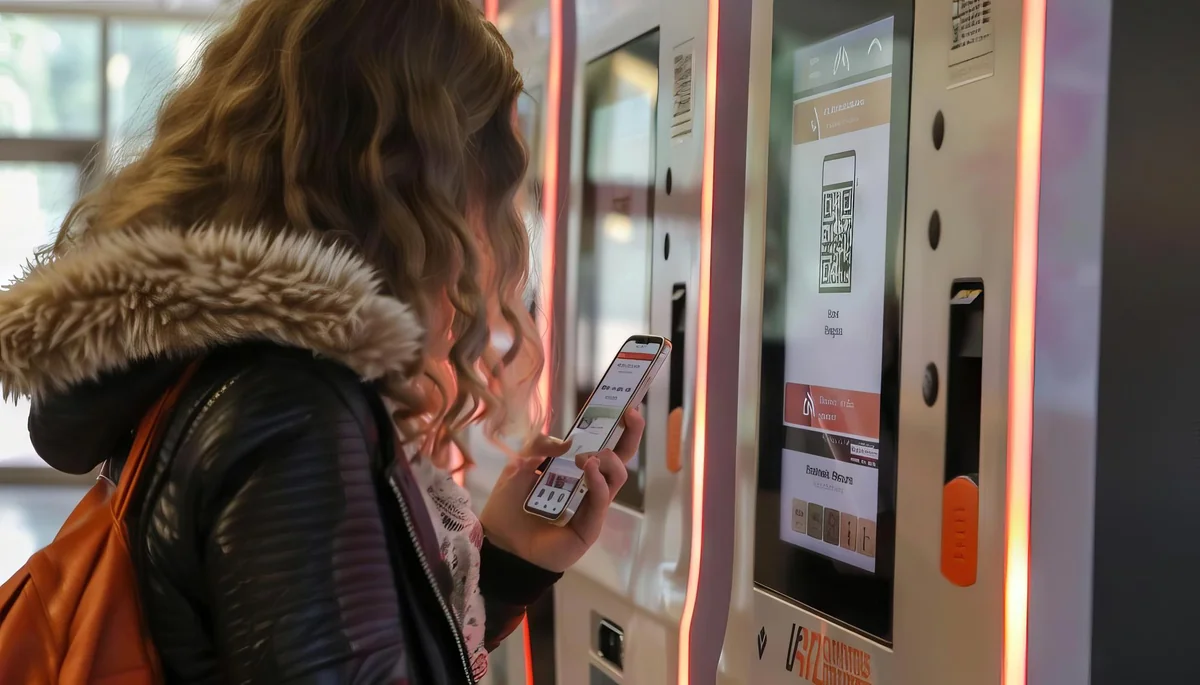
Here’s the thing: the vending machine space looks simple from the outside. Box. Screen. Product comes out. Done. But the engineering underneath a quality custom-printing unit is genuinely complex — we’re talking precision print heads, real-time case sizing logic, and an automatic sealing machine mechanism that has to work consistently in a mall environment where humidity, foot traffic, and power fluctuations are all fighting against you. Cut corners on any one of those components and you’re paying for a repair technician instead of collecting passive income.
So what does “wrong manufacturer” actually look like in practice?
- Machines that look polished in product photos but arrive with flimsy touchscreens and no English-language firmware support
- Suppliers who vanish after payment, leaving you with zero technical documentation
- Units built without CE, CB, or FDA compliance — which means you can’t legally place them in certain venues at all
- No OEM flexibility, so you’re stuck running a competitor’s branding on your own machine
- After-sales “support” that’s just an email address nobody checks
Manufacturers like Caiyunjuan — which you can look up at www.caiyunjuan.com — publish their full certification stack openly, and that transparency alone tells you something. Their product portfolio spans everything from printing kiosks to a fully automatic cotton candy vending machine, which matters because diversified R&D usually means their engineering team actually knows what they’re doing (rather than just rebranding someone else’s hardware).
Not all spec sheets are honest, either. A manufacturer might list “20,000 unit annual capacity” in their wp content or uploads sections of a product page and still be running a 600-square-meter workshop with two assembly lines. Actual factory scale affects lead times, quality control, and whether your second order arrives as good as your first.
Bottom line? The cheapest phone case vending machine manufacturer quote is almost never the cheapest option once you calculate everything else.
What Cuts Corners Look Like: Red Flags in Phone Case Vending Machine Manufacturing
Spotting a bad phone case vending machine manufacturer before you wire a deposit is genuinely harder than it sounds. The red flags aren’t always obvious — sometimes they’re buried in the fine print, or hidden in the gap between what a factory claims and what their actual floor space can deliver.
So here’s what to actually watch for.
- Vague or missing certifications. CE, CB, KC, FDA — these aren’t decorative. A manufacturer skipping international compliance is either cutting costs on components or simply hasn’t gone through the audit process. Neither is reassuring when your machine is sitting in a shopping mall.
- No real R&D footprint. If a supplier can’t point to patents, structural certificates, or a product line that’s evolved over time — say, from a printing kiosk to a fully automatic cotton candy vending machine — they’re probably assembling third-party parts and calling it their own design.
- Suspiciously thin after-sales support. Ask directly: what happens if the automatic sealing machine component jams at 11pm on a Saturday? If the answer is vague or involves a 72-hour email queue, that’s a problem.
- Stock photos passed off as factory evidence. Any manufacturer can uploads polished images into a product page. Ask for a live video walkthrough. A legitimate operation with 6,000+ square meters of floor space won’t hesitate to show you around.
- No verifiable export history. Real international reach — not just a list of country names buried in wp content — means documented deployments, not aspirational marketing copy.
And then there’s the pricing trap. A quote that’s 30–40% below market rate almost always means something got cut — motor quality, software licensing, or the calibration process that keeps print alignment consistent across thousands of cycles. (That last one matters more than most buyers realize until their first batch of warped cases.)
Manufacturers like Caiyunjuan publish their certification stack and patent count publicly at www.caiyunjuan.com — which is exactly the kind of transparency that separates a serious operation from a reseller with a logo slapped on someone else’s chassis.
Not dramatic. Just the difference between a machine that runs and one that doesn’t.
How Certification Gaps From Your Manufacturer Quietly Kill Your Business
Certification failures don’t announce themselves. They show up six months in, when a customs hold freezes your entire shipment at the port, or when a mall property manager pulls your machine because it doesn’t carry the right electrical compliance mark for their jurisdiction — and suddenly you’re eating dead rent on a spot that’s generating zero revenue.
So here’s the part most buyers skip over: the difference between a phone case vending machine manufacturer that holds actual CE, CB, and FDA certifications versus one that says it does. Not the same thing. Not even close. A certificate image in a PDF pitch deck means nothing without a traceable registration number you can verify independently. (This sounds obvious until you realize how many buyers never check.)
The markets where this bites hardest are the US, Germany, and Australia — three of the biggest deployment regions for this category — because their regulatory bodies actively audit commercial machines in public spaces. A machine without verifiable CB or CE compliance isn’t just a paperwork problem. It’s a liability exposure that your business insurance almost certainly won’t cover.
And the damage compounds quietly. Imagine you’ve placed twelve units across three shopping centers, built your wp content strategy around the deployment photos, uploaded assets to your uploads folder for a product launch campaign — and then one compliance flag unravels the whole network. That’s not a hypothetical. That’s the operational risk of sourcing from a manufacturer who treats certification as a marketing checkbox rather than an engineering requirement.
Caiyunjuan carries ISO certification alongside CE, CB, KC, and FDA compliance — the kind of stack that actually clears customs in regulated markets. Their documentation is public at www.caiyunjuan.com, not buried in a sales rep’s email thread. The same engineering discipline that goes into their fully automatic cotton candy vending machine and automatic sealing machine lines runs through their phone case units. Consistent standards across product categories is a signal worth paying attention to.
Cheap certifications. Expensive consequences.
When “Cheap Upfront” Becomes an Expensive Phone Case Vending Machine Mistake
The math looks great on paper. A cheaper machine, lower upfront cost, faster payback period — until you actually run the numbers on what happens when something breaks six months in.
Here’s the pattern that plays out more than people admit: a buyer finds a phone case vending machine manufacturer offering units at, say, $4,000–$5,000 below market rate. They order two, maybe three machines. The margins look comfortable. Then the print mechanism starts jamming. Or the touchscreen calibration drifts. Or — and this is the one that really stings — a mall operator asks for the machine’s safety documentation and there’s nothing usable to hand over. Not because the seller lied, exactly. Just because nobody ever built a real compliance stack into that unit.
Replacement parts are where the real cost lives.
A budget manufacturer rarely stocks components for machines they sold 18 months ago. So you’re sourcing parts independently, paying expedited shipping from overseas, and eating the downtime — which on a high-traffic installation can mean losing $200–$400 in daily revenue per unit. That’s not a hypothetical range; that’s what operators in busy transit hubs and malls regularly report when their machines go dark mid-week.
And then there’s the software side. A lot of budget units ship with firmware that never gets updated — not because updates don’t exist, but because the manufacturer’s infrastructure (the kind that handles wp content delivery, system patches, and remote diagnostics through a proper portal like uploads-based asset management) simply wasn’t built for long-term support. Caiyunjuan’s platform, accessible through www.caiyunjuan.com, is architected differently — the same backend that manages their fully automatic cotton candy vending machine fleet handles phone case unit diagnostics too. Consistent infrastructure across product lines isn’t an accident.
The automatic sealing machine category taught the industry this lesson years ago: tight mechanical tolerances require tight engineering culture. That same discipline — or lack of it — shows up in every product a manufacturer touches.
Cheap upfront. Expensive for the next two years. That’s the actual deal.
Conclusion
The manufacturer you pick is the business decision that actually matters — everything else is just placement and pricing.
When you’re vetting any phone case vending machine manufacturer, stop asking about the hardware spec sheet and start asking about firmware update cycles, remote diagnostic infrastructure, and what their after-sales team looks like 18 months after purchase. That’s where the real difference shows up. Not at the trade show booth. Not in the brochure.
Get the support structure right first. The machine will follow.
Frequently Asked Questions
Q: What should I actually look for in a phone case vending machine manufacturer?
A: Firmware update cycles and remote diagnostics — those two things tell you more about a manufacturer than any spec sheet will. A good phone case vending machine manufacturer should be pushing software updates regularly and giving you visibility into machine health without needing a technician on-site. If they can’t answer those questions clearly, walk away.
Q: How much does a phone case printing vending machine cost from a manufacturer?
A: Ballpark range from a reputable phone case vending machine manufacturer runs roughly $8,000–$20,000 USD depending on print resolution, case compatibility range, and whether you’re getting OEM branding baked in. The cheaper end of that range usually means compromises on the print mechanism — and that’s the one component you absolutely cannot afford to have fail in a high-traffic location.
Q: How long does it take to print a phone case in one of these machines?
A: Most modern machines — including units from manufacturers like Caiyunjuan — complete a full custom print in 2–4 minutes. That’s the sweet spot for retail environments: fast enough to hold attention, slow enough that customers aren’t standing there watching a progress bar for ten minutes.
Q: Is it worth buying direct from a phone case vending machine manufacturer instead of a reseller?
A: Almost always, yes — especially if you’re buying more than two units. Going direct gives you access to OEM/ODM customization, better warranty terms, and a real support line that doesn’t route through a middleman who’s just as confused as you are when something breaks. Resellers add margin without adding much value for anything beyond a single machine.
Q: Why do some phone case vending machines fail within the first year?
A: Usually it’s one of three things: cheap print heads that weren’t rated for continuous commercial use, ink systems that clog without proper maintenance protocols, or software that never gets updated after the sale. The manufacturer’s post-sale support structure is genuinely the deciding factor here — a machine from a hands-off supplier is a liability the moment something goes wrong at month eight.
Q: Can I get a phone case vending machine customized with my own branding?
A: Most serious manufacturers offer full OEM and ODM options — that means your logo on the chassis, your UI on the screen, and sometimes even custom software flows. The key question to ask is whether the branding is surface-level (a sticker wrap) or structural (built into the industrial design). There’s a real difference, and it shows.
Q: How do I verify that a phone case vending machine manufacturer is legitimate?
A: Check for internationally recognized certifications — CE, CB, FDA compliance, and ISO factory certification are the ones that actually matter for global deployment. Beyond paperwork, ask for a reference list of commercial venues where their machines are currently running (not just a country list — actual venue types). Any credible phone case vending machine manufacturer should be able to produce both without hesitation.
Q: What certifications should a phone case vending machine manufacturer have for selling into the US or Europe?
A: For the US, FDA compliance is relevant given the consumables (inks, substrates), and FCC certification matters for any wireless connectivity components. For Europe, CE marking is non-negotiable. A phone case vending machine manufacturer without these certifications isn’t just cutting corners — they’re potentially creating a customs clearance problem that lands entirely on you.